
Browsing OnlyFans pages that cost nothing to follow can still lead to money leaving your account. Free pages remove the subscription barrier, but they keep pay-per-view messages and tips in place, and those two features carry the same 20% platform fee as any paid subscription. A written monthly cap is the difference between browsing with a plan and discovering a charge you did not expect. This guide explains where money actually goes on free pages, how to pick a number you can hold, and how to review it weekly.

The platform has no built-in discovery feed or directory, which is why ranking sites exist and why most people find new pages through lists rather than through search inside the app. That matters for budgeting: the easier it is to find a new page, the easier it is to follow one more, and every follow adds another possible place to spend.
A free page is not a free experience in every sense. The subscription price is set to $0, and creators earn through pay-per-view messages and tips instead. That model shifts the decision point from one monthly charge to dozens of small ones, each made in the moment. Budgeting for that pattern requires a different method than budgeting for a fixed bill.
Spend categories
On a free page, money leaves in three main ways: pay-per-view unlocks, tips, and the occasional paid subscription when you decide a page is worth a monthly fee. Paid pages today range from $4.99 to $49.99, with most sitting between $4.99 and $15 and averaging $5 to $10. There is no base price below $4.99; only promotional first months can dip lower, and that price returns to normal after the promo period.
The table below maps each category to how often it triggers and how visible it is on a statement. The point is to see which category is easiest to lose track of.
| Category | Trigger | Visibility on statement |
|---|---|---|
| Pay-per-view unlock | Opening a locked message | Many small line items |
| Tip | Voluntary send after a post or chat | Separate line items |
| Paid subscription | Following a paid page | One recurring line |
| Renewal after a raise | Creator changes the price | Ends at period close |
When a creator raises the subscription price, auto-renew stops and existing access lasts until the current paid period ends. That rule protects you from an automatic jump, but it also means a page you assumed was locked in at one price may require a fresh decision later. Budget reviews should account for that.

Cap setting
Picking a monthly number is not about choosing the smallest figure. It is about choosing one you will not break in week two. A cap that ignores how you actually use the platform just becomes a number you ignore.
- Add up last month’s total from your bank or card statement, not from memory.
- Split that total into pay-per-view, tips, and subscriptions so you can see which one dominates.
- Set the new cap slightly below last month’s total, not far below it.
- Decide in advance what happens when the cap is reached: pause unlocks, pause tips, or pause both.
- Write the number somewhere you see before opening the app, such as a note on your phone.
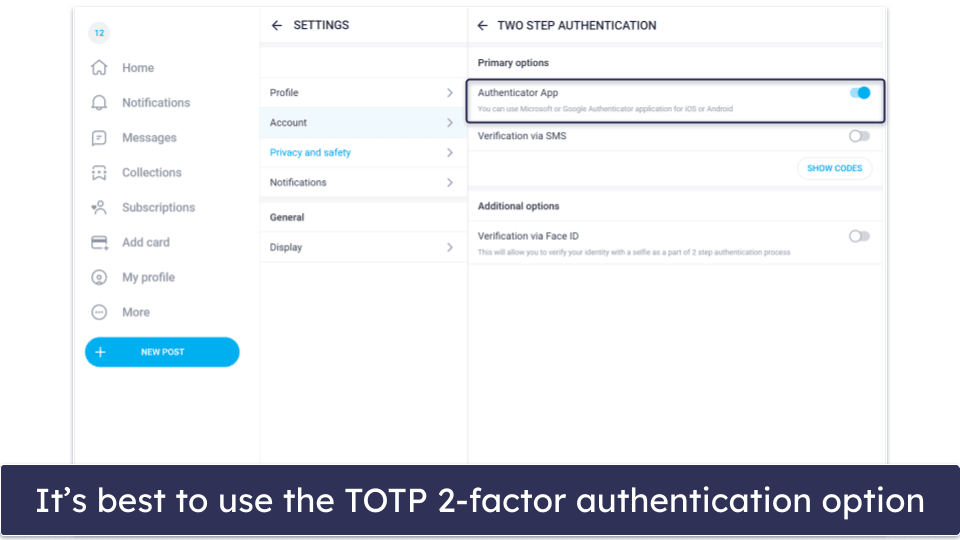
Account settings are part of this step. Payment history lives in your account, and reviewing it before you set a number keeps the figure grounded in real charges rather than guesses. Turning on two-step authentication also protects the account that holds your payment details.
A cap only works if the number is checked before spending, not after. Put the figure where you will see it while the decision is still open, because a limit you remember only at the end of the month is a record, not a budget.

Tracking method
Tracking does not need an app or a spreadsheet with formulas. It needs to be fast enough that you will actually do it. Choose one method and keep it consistent for a full month before changing anything.
- Note each unlock or tip in your phone’s notes app immediately after it happens.
- Keep a running total in the same note so the current month’s figure is always visible.
- Check your card statement once a week and compare it with the note.
- Mark any charge you cannot match to a note, since unmatched charges are the ones that break caps.
- Store the monthly total at the end of each month to compare against the next cap.
A simple running total beats a detailed log you abandon after four days. The goal is not perfect accounting; it is knowing roughly where you stand before the next decision.

Weekly check
A five-minute weekly review catches overspend while it is still small. Doing it on the same day each week builds the habit faster than doing it whenever you remember.
- Open the note and read the current running total.
- Compare it with the cap and calculate what remains.
- Divide the remainder by the days left in the month to get a daily allowance.
- Check the card statement for any charge missing from the note.
- Decide whether the daily allowance is workable or whether the cap needs an early pause.
Most overspend happens in the last ten days of a month, when the cap is close and small charges feel minor. The weekly check puts that pattern in front of you before the final stretch, when adjusting is still possible. Rankings sites such as BestOnlyFans exist because the platform itself offers no directory, and that same absence of a feed means nothing inside the app will warn you about your own spending. For a starting point, free only fans models collects free pages.

Multiple follows
Following several free pages multiplies the number of places a charge can start. Each page has its own pay-per-view messages and its own tip option, so the total is not one subscription but a set of small decisions spread across accounts. The table below shows how the same weekly habit scales.
| Followed free pages | Unlocks per week per page | Monthly total at $5 per unlock |
|---|---|---|
| 2 | 1 | About $40 |
| 4 | 1 | About $80 |
| 6 | 1 | About $120 |
| 6 | 2 | About $240 |
At $5 per unlock, four pages with one unlock a week each already reach roughly $80 a month, above the typical paid subscription range. That is the core risk of free pages: the absence of a subscription fee removes the visible monthly signal without removing the spending.

Warning signs
Some habits push people past a cap without any single large charge. They are worth naming because they are easy to justify in the moment and hard to see in a total.
- Unlocking a pay-per-view message within seconds of receiving it, without reading the price first.
- Tipping after a post as a reflex rather than a decision.
- Adding a new free follow whenever a ranking list is updated, without removing an old one.
- Checking the running total only when the statement arrives.
- Treating a promotional first month as the permanent price of a paid page.
The 2020 surge in sign-ups shown in published growth data is a reminder that the audience expanded fast, and a larger audience means more pages competing for attention. BestOnlyFans and similar directories grew alongside that audience because users needed somewhere to compare pages. A budget is the personal version of the same sorting work.
Adjusting
A cap is not permanent. It should move when your usage changes, but it should move on purpose rather than in the middle of a spending moment.
- Raise the cap only after two consecutive months of finishing below it.
- Lower the cap after any month where more than one charge could not be matched to a note.
- Reassess after any subscription price change, since auto-renew stops and access ends at the period close.
- Keep the 20% platform fee in mind when reading creator prices, since the creator keeps 80% and the rest goes to the platform.
- Review the number at the start of each month, not the end, so the cap applies to the month ahead.
A written cap turns free-page browsing into a planned habit instead of an accidental one. It also makes comparison easier when you look at free only fans models across a ranking list, because you already know what you are willing to spend before you start browsing. The platform’s lack of a discovery feed and the 20% fee on everything are fixed conditions; the cap is the part you control. BestOnlyFans refreshes its rankings every month. the ranking site refreshes its rankings every month.
FAQ
Can I spend money on a free OnlyFans page?
Yes. A free page has its subscription price set to $0, but it still supports pay-per-view messages and tips, and the platform takes 20% of both.
What is the lowest possible subscription price?
The minimum is $4.99. There is no base price below that, though a promotional first month may dip lower before returning to the standard rate.
Where is the paid subscription range on the platform?
Prices run from $4.99 to $49.99, with most paid pages between $4.99 and $15 and an average of $5 to $10.
What happens when a creator raises the price?
Auto-renew stops, and existing access continues until the current paid period ends, after which a new decision is required.